
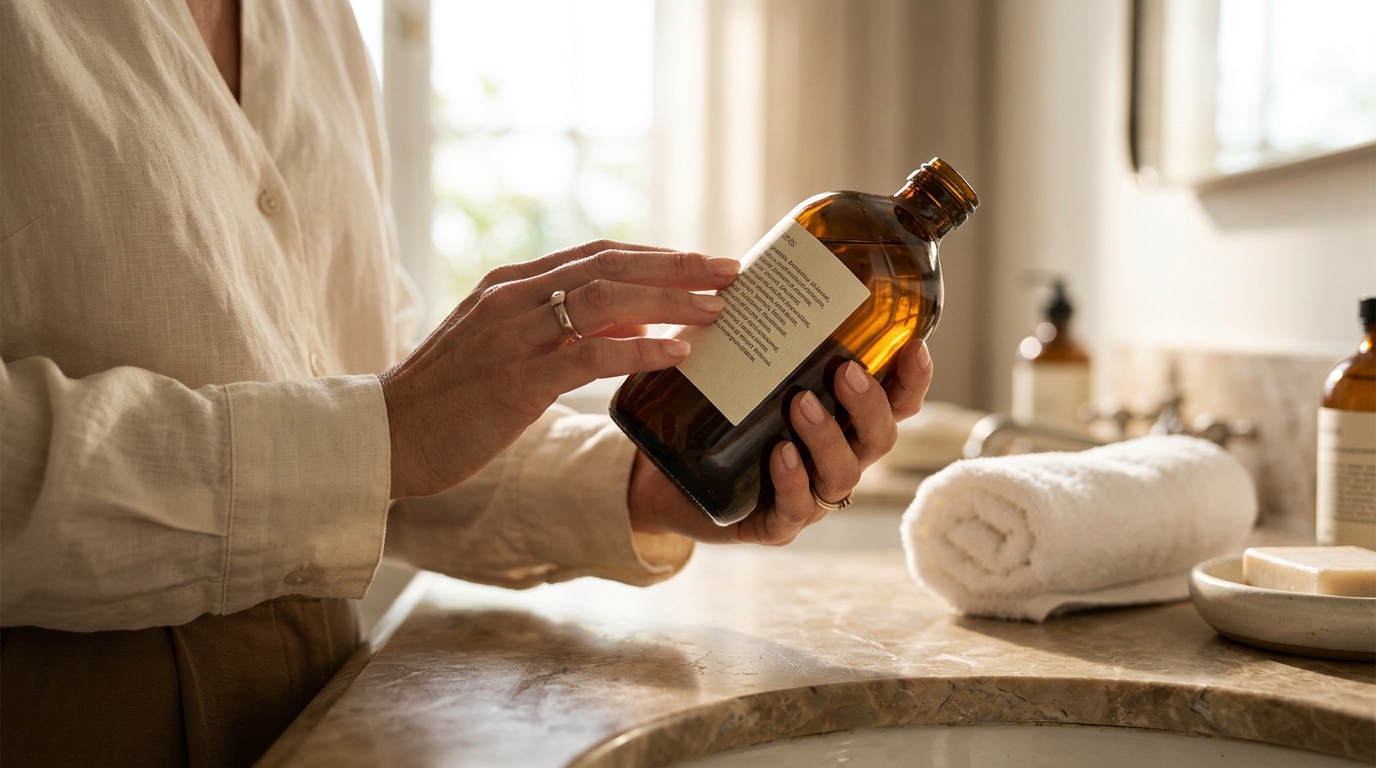
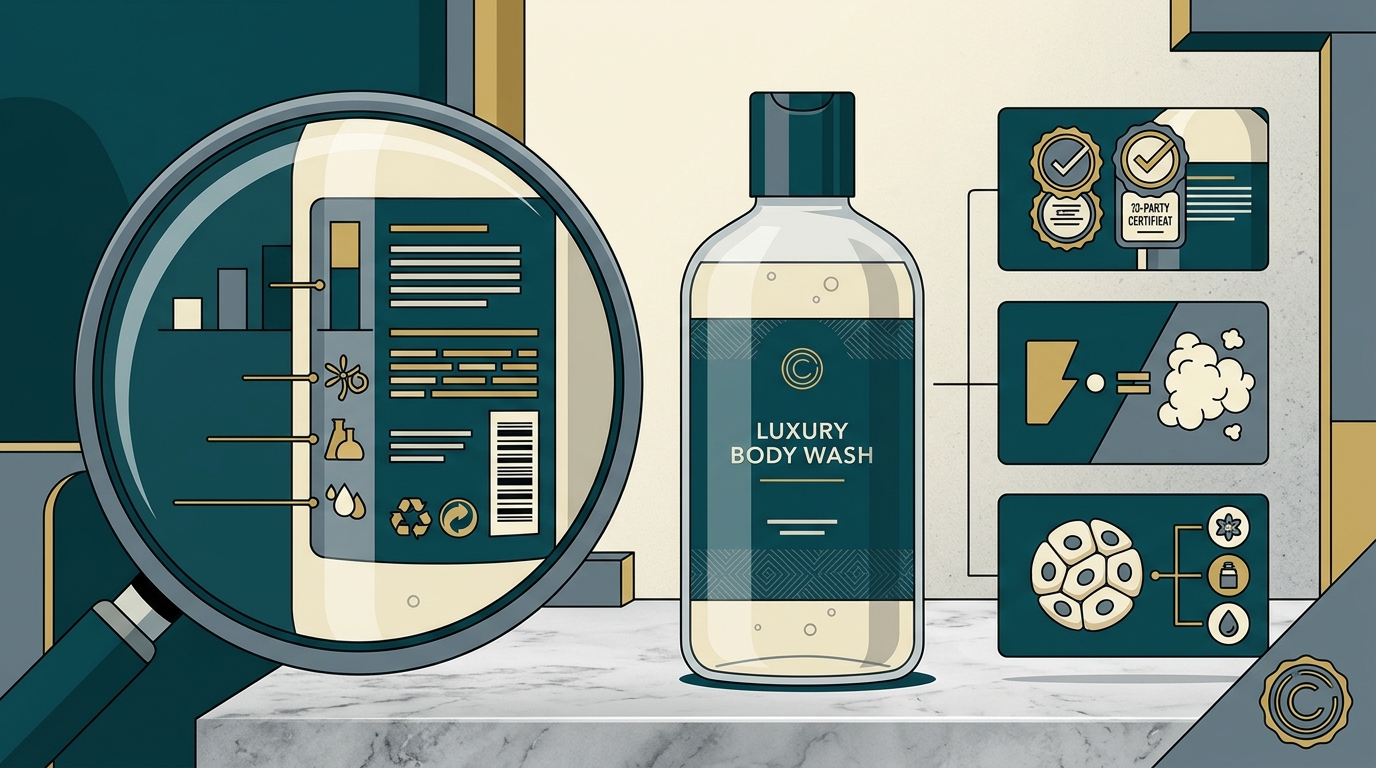
Buyers should verify ingredient order, fragrance transparency, preservative safety, hydrating actives, and third-party certifications. This guide explains how to read labels accurately. It helps you avoid marketing fluff. It focuses on what actually matters for skin health. Baby B's Boutique curates products that meet these standards. We help you make informed choices for your self-care routine.
Ingredient List Order
Ingredient list order is the sequence in which components appear on a product label. Regulatory standards require ingredients to be listed in descending order of concentration. This means the first ingredient is present in the highest amount. The last ingredients are present in the smallest amounts. Understanding this hierarchy is the first step in evaluating any body wash. For additional details, review the Terms of service ndash.
Reading the Top Five
The first five ingredients typically make up the bulk of the formula. Water is almost always first. Surfactants follow, which are the cleaning agents. If a product claims to be rich in a specific botanical, check where that botanical appears. If it is listed after the first five ingredients, its concentration is likely low. This does not mean it is useless, but it is not the primary driver of the product's effect. For additional details, review the Collections ndash Baby B.
Common Misconceptions
Many consumers assume that ingredients listed last are the most important. This is incorrect. Ingredients listed last are often preservatives, fragrances, or colorants. They are present in trace amounts. Their role is to stabilize the formula or provide scent, not to clean or hydrate. Focus your attention on the top half of the list for functional benefits. For additional details, review the Products ndash Baby B.
Fragrance Transparency
Fragrance transparency is the degree to which a brand discloses the specific chemical compounds used in its scent profile. The term "fragrance" or "parfum" on a label can hide dozens of different chemicals. These are often proprietary blends. Without transparency, you cannot know if you are exposed to known sensitizers. This is a critical factor for buyers with sensitive skin.
Why Brands Hide Fragrance
Identifying Hidden Allergens
Some fragrance compounds are known allergens. Linalool and limonene are common examples. They are found in many natural essential oils. They can oxidize over time and become sensitizers. If you have a history of contact dermatitis, be cautious with products that list "fragrance" without further detail. Patch testing is a prudent step before full use.
Preservatives and Allergens
Preservatives are substances added to prevent the growth of bacteria, mold, and yeast. They are essential for the safety of any water-based product. However, some preservatives are also common allergens. Knowing which ones to watch for is vital for maintaining skin barrier health. This section covers the most common preservative systems and their potential impacts.
Common Preservative Systems
Parabens are a widely used class of preservatives. They are effective and generally safe for most people. However, they are often avoided by consumers due to misconceptions. Methylisothiazolinone (MI) is another common preservative. It is a known sensitizer and is restricted in leave-on products in many regions. It is less common in rinse-off products like body wash but still worth noting. Phenoxyethanol is a popular alternative. It is generally well-tolerated but can cause irritation in high concentrations.
How to Check for Sensitizers
Look for the INCI names of preservatives on the label. If you have a known allergy, cross-reference the list. Many dermatologists recommend avoiding products with MI or formaldehyde-releasing preservatives if you have sensitive skin. The goal is not to fear all preservatives, but to choose the ones your skin tolerates best. Consistency is key. If a product works for you, stick with it. Changing preservative systems frequently can disrupt your skin's microbiome.
Hydrating Actives
Hydrating actives are ingredients that help the skin retain moisture. They work by attracting water to the skin or by reinforcing the skin barrier. In a body wash, these ingredients are present for a short time. Their impact is less significant than in a leave-on lotion. However, they can still influence how your skin feels immediately after rinsing. Look for humectants and emollients in the formula.
Key Humectants to Look For
Glycerin is the gold standard for humectants. It is effective, affordable, and well-tolerated. It draws water from the air into the skin. Hyaluronic acid is another popular choice. It can hold many times its weight in water. However, in a rinse-off product, its benefits are temporary. Urea is another effective humectant. It also has keratolytic properties, which can help with rough skin. If your skin feels tight after showering, look for products with higher concentrations of these ingredients.
Emollients and Barrier Support
Third Party Certifications
Common Certifications Explained
Cruelty-free certifications, such as Leaping Bunny, verify that no animal testing was conducted at any stage of product development. Organic certifications, such as USDA Organic, verify that a certain percentage of ingredients are organically grown. Dermatologist-tested is a marketing term, not a strict certification. It means the product was tested on human subjects under medical supervision. It does not guarantee the product is safe for everyone. Always read the fine print on certification logos.
Why Certifications Matter
Key Takeaways
- Ingredient order indicates concentration. The first ingredients are present in the highest amounts.
- Preservatives are necessary for safety. Be aware of common sensitizers like MI and formaldehyde-releasers.
- Hydrating actives in rinse-off products have limited impact. Focus on humectants like glycerin for immediate comfort.
- Third-party certifications provide independent verification. Look for cruelty-free and organic labels if they align with your values.
- Consistency is key. If a product works for your skin, stick with it. Frequent changes can cause irritation.
- Read the full label. Marketing claims on the front of the bottle are not as important as the ingredient list on the back.
Frequently Asked Questions
What is the most important ingredient in a body wash?
The most important ingredient is the surfactant. It is the component that actually cleans your skin. Look for gentle surfactants like decyl glucoside or coco-glucoside. Harsh sulfates can strip natural oils and cause dryness. The choice of surfactant should match your skin type.
Are parabens safe in body wash?
Parabens are generally considered safe for use in cosmetics. They are effective preservatives. However, some consumers prefer to avoid them due to personal preference or sensitivity. If you have a known allergy, avoid them. Otherwise, they are a standard and safe ingredient in many products.
How do I know if a body wash is fragrance-free?
A truly fragrance-free product will not list "fragrance" or "parfum" on the ingredient label. It may also carry a "fragrance-free" certification. Be aware that some products labeled "unscented" may still contain masking fragrances. Always check the full ingredient list to be sure.
What is the difference between a body wash and a soap?
Do I need to rinse body wash thoroughly?
Yes, you should rinse body wash thoroughly. Residue can clog pores and cause irritation. However, you do not need to scrub aggressively. Gentle rinsing is sufficient to remove the cleanser. Over-washing can strip natural oils and disrupt the skin barrier.
Where can I find reliable body wash recommendations?
How often should I change my body wash?
You do not need to change your body wash frequently. If a product works well for your skin, you can use it for months or years. Change your body wash if you notice irritation, dryness, or a change in your skin's needs. Seasonal changes may also affect your skin's hydration levels.
Is it safe to use body wash on my face?
It is generally not recommended to use body wash on your face. Body washes are formulated for the thicker skin on your body. They may be too harsh for the delicate skin on your face. Use a dedicated facial cleanser for your face. This ensures you are using a product that is gentle and appropriate for your facial skin.
Conclusion
Verifying the ingredients in luxury body washes is a simple but powerful way to take control of your skin health. By understanding ingredient order, fragrance transparency, preservatives, hydrating actives, and certifications, you can make informed choices. You do not need to be a chemist to do this. You just need to be a careful reader. Baby B's Boutique is committed to helping you navigate this landscape. We curate products that meet high standards of quality and transparency. Explore our Health & Beauty Collection to find products that align with your values and skin needs. Your skin deserves the best. Start by reading the label.