

Online shoppers increasingly demand robust security when purchasing from boutique retailers. Baby B's Boutique, a specialized online store for fragrance, clothing, and gifts, prioritizes customer trust through secure transaction protocols. This guide explains the technical standards that protect your data during checkout. We cover encryption standards, compliance frameworks, and verification methods. Understanding these elements helps you shop with confidence in 2026.
SSL/TLS Encryption Standards
Secure Sockets Layer (SSL) is a protocol that encrypts data transmitted between a web browser and a server. Its successor, Transport Layer Security (TLS), is the current industry standard for securing online communications. TLS 1.2 and TLS 1.3 are the versions widely adopted by modern e-commerce platforms. These protocols ensure that sensitive information, such as credit card numbers and addresses, remains unreadable to interceptors during transit. For additional details, review the Your Shopping Cart ndash.
The Role of Certificates
SSL certificates are digital files that authenticate a website's identity. When you visit a secure site, your browser verifies the certificate against a trusted Certificate Authority (CA). This handshake process establishes an encrypted channel before any data is exchanged. Without a valid certificate, browsers display security warnings, which can deter customers from completing purchases. For additional details, review the .
Encryption Strength
Modern TLS implementations use strong encryption algorithms, such as AES-256. This level of encryption is considered unbreakable with current computing power. For boutiques like Baby B's Boutique, maintaining up-to-date TLS configurations is essential. It ensures that every session is protected against man-in-the-middle attacks and data sniffing. For additional details, review the Customer Experience.
PCI DSS Compliance
Payment Card Industry Data Security Standard (PCI DSS) is a set of security standards designed to ensure that all companies that accept, process, store, or transmit credit card information maintain a secure environment. Compliance is mandatory for any business handling cardholder data. It reduces the risk of data breaches and protects both the merchant and the consumer. For additional details, review the Frequently Asked Questions.
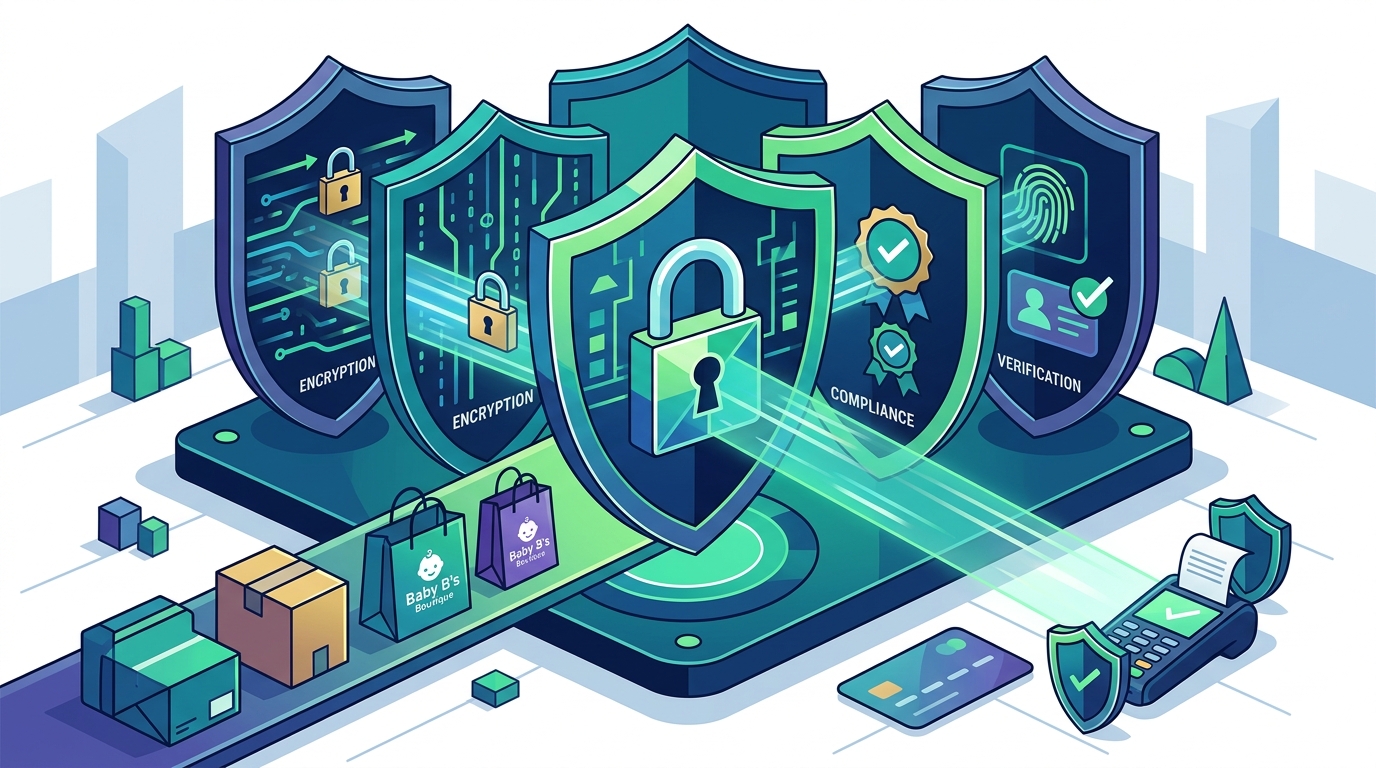
Levels of Compliance
PCI DSS categorizes merchants into four levels based on their annual transaction volume. Level 1 merchants process over 6 million transactions annually, while Level 4 merchants process fewer than 1 million. Most small to medium-sized boutiques fall into Level 3 or Level 4. These levels typically require self-assessment questionnaires rather than on-site audits, making compliance more accessible for smaller retailers.
Scope and Validation
Payment Processor Security
A payment processor is a service that facilitates the transfer of funds between a customer and a merchant. Security in this layer is critical because it handles the actual authorization and settlement of transactions. Reputable processors implement multi-layered security measures, including tokenization and fraud detection systems.
Tokenization Technology
Tokenization is a security technique that replaces sensitive data with non-sensitive unique identifiers. When a customer enters their card details, the processor generates a token. This token is stored instead of the actual card number. If a breach occurs, the stolen tokens are useless without the processor's secure vault. This technology is a cornerstone of modern e-commerce security.
Fraud Prevention Tools
HTTPS Verification Methods
Browser Indicators
Modern browsers display a padlock icon next to the URL in the address bar. Clicking this icon reveals certificate details, including the issuer and expiration date. If the padlock is missing or displays a warning, the connection is not secure. Users should avoid entering personal information on sites without a valid HTTPS connection.
Manual Verification
Users can manually verify the certificate by clicking the padlock icon. This action opens a dialog box showing the certificate chain. Checking the validity dates ensures the certificate is current. Additionally, online tools can be used to scan a website's SSL configuration. These tools provide detailed reports on supported protocols and cipher suites.
Comparison of Security Features
| TLS 1.3 | Latest encryption protocol | High speed and strong security |
| PCI DSS SAQ | Self-assessment questionnaire | Required for card acceptance |
| Tokenization | Data replacement technique | Reduces breach impact |
| HTTPS Padlock | Browser security indicator | Builds customer trust |
Key Takeaways
- TLS 1.2 and 1.3 are the standard protocols for securing web traffic.
- PCI DSS compliance is mandatory for any business accepting credit cards.
- Tokenization protects card data by replacing it with useless tokens.
- The HTTPS padlock icon is the primary visual indicator of a secure connection.
- Small boutiques often fall under PCI DSS Level 3 or 4.
- Regular certificate renewal is necessary to maintain trust.
- Fraud detection tools help prevent unauthorized transactions.
- Customers should always verify the padlock icon before entering data.
Frequently Asked Questions
What is the difference between SSL and TLS?
SSL is the older protocol, while TLS is its successor. TLS 1.2 and 1.3 are the current standards. SSL is considered obsolete and should not be used.
How can I tell if a website is secure?
Look for the padlock icon in the browser's address bar. The URL should start with https://. Clicking the padlock shows certificate details.
What is PCI DSS?
PCI DSS is a security standard for handling credit card data. It ensures that merchants maintain a secure environment for cardholder information.
Do small boutiques need PCI compliance?
Yes, all businesses that accept credit cards must comply with PCI DSS. The level of compliance depends on transaction volume.
What is tokenization?
Tokenization replaces sensitive data with a non-sensitive identifier. This protects data even if a breach occurs.
Is HTTPS enough for security?
HTTPS encrypts data in transit, but it is not the only security measure. PCI compliance and fraud detection are also necessary.
How often should SSL certificates be renewed?
Certificates typically expire after one year. They must be renewed before expiration to avoid security warnings.
What should I do if I see a security warning?
Do not enter any personal information. Leave the site and report it if necessary. Security warnings indicate a potential risk.
Conclusion
Understanding the security measures behind online checkout is essential for confident shopping. Baby B's Boutique is committed to providing a safe environment for your purchases. By adhering to SSL/TLS standards, PCI DSS compliance, and robust payment processor security, we protect your data at every step. Always verify the HTTPS connection before entering sensitive information. For more information on our products and security practices, visit the Baby B's Boutique homepage.