

Secure Encrypted Checkout: The 2026 Guide for Online Boutique Shoppers
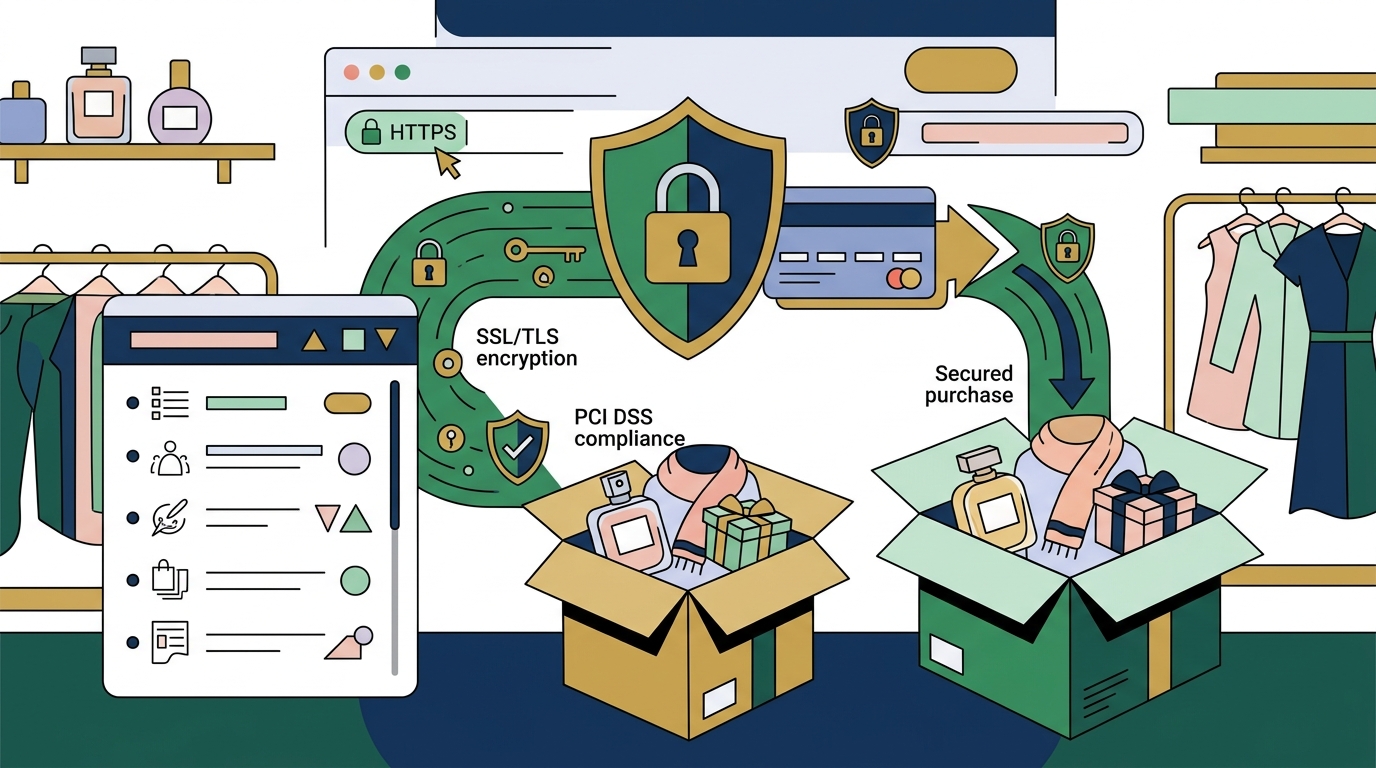
Online boutiques like Baby B's Boutique utilize encrypted checkout to protect your financial data during transactions. This guide explains how SSL/TLS encryption, PCI DSS compliance, and HTTPS verification work together to secure your payment information. We cover the technical standards that ensure your credit card details remain private and safe while shopping for fragrance, apparel, and gifts.
SSL/TLS Encryption Standards
Secure Sockets Layer (SSL) and its successor, Transport Layer Security (TLS), are the foundational protocols that encrypt data transmitted between your browser and a website. When you enter your credit card number into an online store, this data travels through the internet in an unencrypted state unless protected by these protocols. Encryption converts readable data into a complex string of characters that only the intended recipient can decode.
The Role of TLS 1.2 and 1.3
How Encryption Protects Your Data
During a secure transaction, the browser and the server perform a handshake to agree on encryption keys. This process ensures that any data sent, including your name, address, and payment details, is encrypted in transit. Even if a malicious actor intercepts the data packets, they cannot read the information without the decryption key. This layer of protection is essential for any online retailer handling sensitive personal and financial information.
PCI DSS Compliance
The Payment Card Industry Data Security Standard (PCI DSS) is a global security standard designed to ensure that all companies that accept, process, store, or transmit credit card information maintain a secure environment. Compliance with PCI DSS is not optional for online merchants; it is a requirement imposed by credit card brands to protect consumers and reduce fraud.
Levels of Compliance
Merchants are categorized into different levels based on their annual transaction volume. Level 1 merchants, which process over one million Visa transactions annually, must undergo rigorous on-site audits. Smaller merchants, such as independent boutiques, typically fall under Level 2 or Level 3. These levels require self-assessment questionnaires and regular scanning by Approved Scanning Vendors (ASV). By adhering to these standards, a store ensures that its systems are regularly tested for vulnerabilities.
Why Compliance Matters to Shoppers
When a boutique states it is PCI DSS compliant, it signals that they have implemented specific security controls. These controls include maintaining a firewall, not storing card data after authorization, and restricting access to system components. For shoppers, this means that the merchant has a structured approach to security rather than relying on ad-hoc measures. It provides a baseline of trust that your data is handled according to industry best practices.
Payment Processor Security
Payment processors act as the intermediaries between the merchant, the customer, and the acquiring bank. They handle the actual movement of funds and the verification of payment details. The security of the payment processor is just as important as the security of the merchant's website itself.
Tokenization and Data Minimization
Advanced payment processors use tokenization to replace sensitive card data with a unique random value called a token. This token has no inherent value and cannot be used for fraudulent transactions. By using tokenization, the merchant never actually stores the full credit card number on their servers. This significantly reduces the risk of a data breach exposing customer payment details. If a hacker gains access to the merchant's database, they only find tokens, which are useless without the processor's secure vault.
3D Secure Authentication
Many modern payment processors support 3D Secure, an additional authentication layer for online card-not-present transactions. This protocol verifies the cardholder's identity through a one-time password or biometric verification provided by the issuing bank. It shifts some of the liability for fraudulent transactions from the merchant to the card issuer, providing an extra layer of protection for both the shopper and the boutique.
HTTPS Verification Methods
Checking the Padlock Icon
Most modern web browsers display a padlock icon in the address bar when a site is using a valid SSL certificate. Clicking this icon reveals details about the certificate, including the issuing authority and the expiration date. A valid certificate ensures that the website is who it claims to be and that the connection is encrypted. If the padlock is missing or displays a warning, the site is not using HTTPS, and you should avoid entering any sensitive information.
Validating the Certificate
While the padlock icon is a good indicator, savvy shoppers can validate the certificate further. By clicking the padlock and selecting 'View Certificate,' you can check the 'Issued To' field to ensure it matches the domain name of the website. You can also check the 'Valid From' and 'Valid To' dates to ensure the certificate is current. Expired certificates can still encrypt data, but they indicate that the site owner is not maintaining their security infrastructure properly.
Comparison of Security Features
| SSL/TLS Encryption | Encrypts data in transit | Check for HTTPS in URL |
| PCI DSS Compliance | Ensures secure handling of card data | Look for compliance badges or statements |
| Tokenization | Replaces card data with tokens | Trust reputable payment processors |
| 3D Secure | Additional identity verification | Complete authentication prompts |
Key Takeaways
- HTTPS is the minimum requirement for any secure online checkout.
- PCI DSS compliance ensures that merchants follow industry security standards.
- Tokenization protects your card data by replacing it with useless tokens.
- Always check the padlock icon and certificate details in your browser.
- Reputable boutiques use modern TLS versions like 1.2 and 1.3.
- 3D Secure adds an extra layer of identity verification for transactions.
- Expired SSL certificates are a red flag for poor security maintenance.
- Trust your instincts; if a site looks suspicious, do not enter payment info.
Frequently Asked Questions
What does HTTPS mean in a website URL?
HTTPS stands for Hyper Text Transfer Protocol Secure. It indicates that the connection between your browser and the website is encrypted using SSL/TLS protocols, protecting your data from interception.
How can I tell if a boutique is PCI DSS compliant?
Look for a PCI DSS compliance badge on the checkout page or in the footer of the website. You can also check if they use a reputable payment processor that is itself PCI compliant.
Is tokenization the same as encryption?
No, they are different. Encryption scrambles data so it can be unscrambled with a key. Tokenization replaces data with a random value that has no inherent meaning and cannot be reversed.
What should I do if I see a security warning in my browser?
Do not proceed with the transaction. Close the page and do not enter any personal or financial information. Security warnings indicate that the site's certificate is invalid or the connection is not secure.
Do all online stores use the same payment processors?
No, merchants can choose from various payment processors. However, most reputable processors adhere to strict security standards and offer features like tokenization and 3D Secure.
Why is TLS 1.3 considered more secure than older versions?
TLS 1.3 removes outdated and weaker cryptographic algorithms, resulting in a faster and more secure handshake process. It provides stronger protection against potential attacks.
Conclusion
Shopping online for fragrance, apparel, and gifts requires confidence in the security of your transaction. By understanding the role of SSL/TLS encryption, PCI DSS compliance, and payment processor security, you can make informed decisions about where to shop. Always verify the HTTPS connection and check for security indicators before entering your payment details. Baby B's Boutique is committed to providing a secure shopping experience, ensuring that your data is protected with industry-standard encryption and compliance measures. For more information on our security practices, visit our contact page or explore our full catalog with confidence.