

Secure Checkout Guide for Online Fragrance and Apparel Boutiques
Online shoppers increasingly demand robust security when purchasing luxury fragrances and apparel. Baby B's Boutique provides a secure encrypted checkout environment for all customers. This guide explains the technical standards that protect your data, including SSL/TLS encryption, PCI DSS compliance, and HTTPS verification methods. We cover how these systems work together to ensure your payment information remains private and safe during every transaction.
SSL/TLS Encryption Standards
How Encryption Protects Your Data
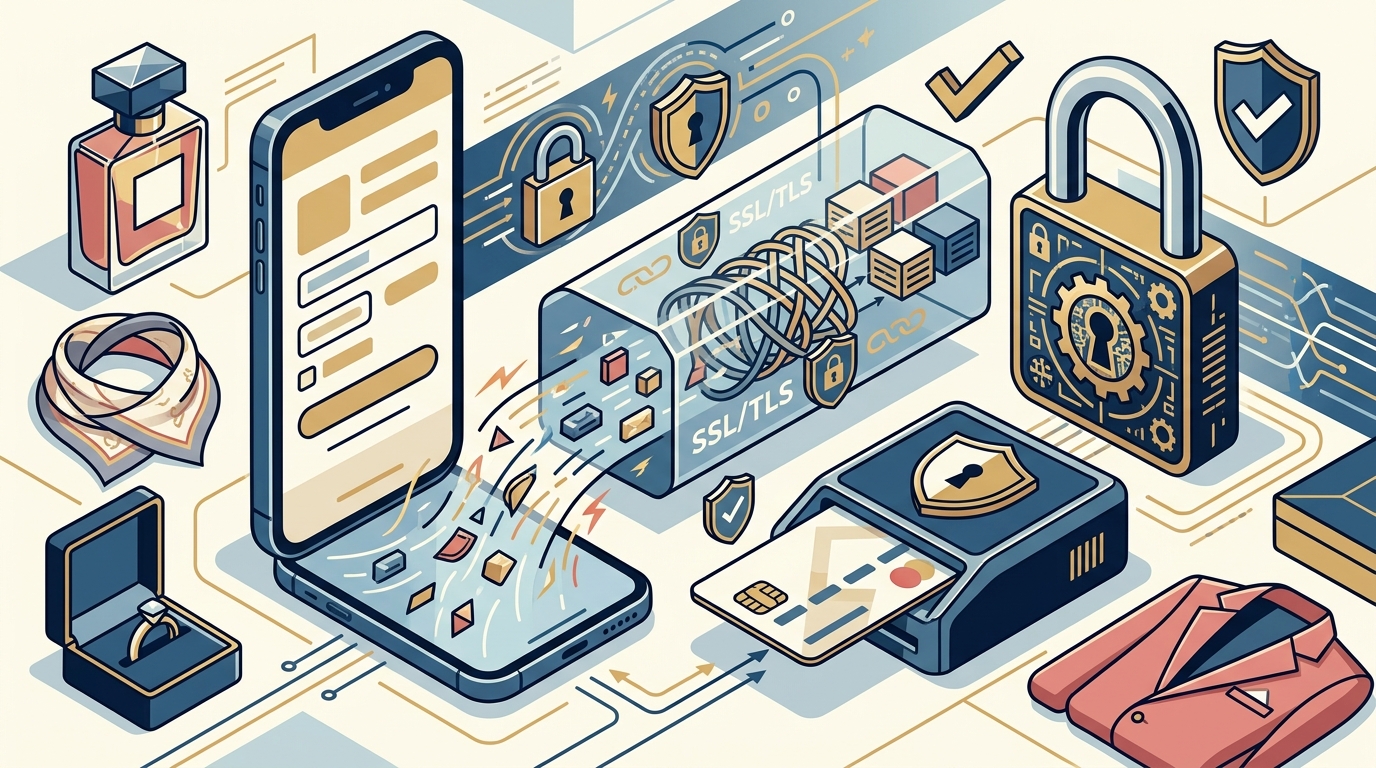
Without SSL/TLS, your data would travel across the internet in plain text. This makes it vulnerable to interception by malicious actors using techniques like man-in-the-middle attacks. By implementing strong encryption standards, Baby B's Boutique ensures that your sensitive information is unreadable to anyone who might intercept the data packets during transit.
Current Encryption Protocols
Industry standards have evolved significantly over the past two decades. SSL 3.0 and TLS 1.0 are considered obsolete and insecure due to known vulnerabilities. Current best practices recommend using TLS 1.2 or TLS 1.3. TLS 1.3 offers faster handshakes and stronger security by removing outdated cryptographic algorithms. Most modern browsers and servers now support TLS 1.3 by default, ensuring a high level of security for online transactions.
PCI DSS Compliance
The Payment Card Industry Data Security Standard (PCI DSS) is a set of security standards designed to ensure that all companies that accept, process, store, or transmit credit card information maintain a secure environment. Compliance with PCI DSS is mandatory for any business that handles credit card data. It helps prevent data breaches and protects both the merchant and the consumer.
Levels of Compliance
PCI DSS compliance is categorized into four levels based on the volume of transactions processed annually. Level 1 is for the largest merchants, while Level 4 is for the smallest. Most small to medium-sized online retailers, including boutique stores, fall into Level 3 or Level 4. These levels require merchants to complete a Self-Assessment Questionnaire (SAQ) to verify their security practices. The SAQ is a form that merchants fill out to confirm they are following the necessary security protocols.
Key Requirements for Merchants
Merchants must implement strong access control measures to limit access to cardholder data. This includes using multi-factor authentication for administrative access. They must also protect stored data by encrypting it. Regular vulnerability scanning and penetration testing are required to identify and fix security weaknesses. Additionally, merchants must maintain a robust information security policy and train employees on security best practices.
By adhering to PCI DSS guidelines, Baby B's Boutique demonstrates a commitment to protecting customer financial data. This compliance reduces the risk of data breaches and builds trust with shoppers who are concerned about online security. It also helps merchants avoid potential fines and penalties associated with non-compliance.
Payment Processor Security
A payment processor is a third-party service that handles the financial transactions between the merchant and the customer. These processors are responsible for transmitting payment information to the card networks and banks. They play a critical role in ensuring that transactions are secure and that fraud is minimized. Using a reputable payment processor is essential for any online business.
Tokenization and Data Minimization
Tokenization is a security technique that replaces sensitive data, such as credit card numbers, with a unique identifier called a token. This token has no exploitable value if intercepted. The actual card data is stored securely by the payment processor, not by the merchant. This practice, known as data minimization, reduces the attack surface for the merchant. If a merchant's website is compromised, the attacker cannot access the actual credit card numbers because they are not stored on the merchant's servers.
Fraud Detection and Prevention
Payment processors employ advanced fraud detection systems to identify suspicious transactions. These systems use machine learning algorithms to analyze transaction patterns and flag anomalies. For example, a purchase from a location far from the customer's usual billing address might trigger a fraud alert. The processor can then request additional verification from the customer, such as a one-time password sent via text message. This multi-layered approach helps prevent unauthorized transactions and protects both the merchant and the customer.
At Baby B's Boutique, we integrate with secure payment processors that offer these advanced security features. This ensures that your payment information is handled by experts who specialize in financial security. It also provides an additional layer of protection beyond the basic SSL/TLS encryption used on the website.
HTTPS Verification Methods
Checking the Padlock Icon
The padlock icon is the most visible indicator of a secure connection. When you see a closed padlock, it means the site is using HTTPS. If the padlock is open or missing, the site is not secure, and you should avoid entering any personal information. Clicking on the padlock icon usually provides more details about the certificate used by the site. This includes the name of the certificate authority that issued the certificate and the expiration date.
Inspecting the Certificate
For a more detailed check, you can inspect the SSL certificate. This can be done by clicking on the padlock icon and selecting an option like "Connection is secure" or "Certificate is valid." The certificate details will show the issuer, the subject (the website), and the validity period. A valid certificate should be issued by a trusted certificate authority and should not be expired. If the certificate is self-signed or issued by an untrusted authority, your browser will display a warning. You should not proceed if you see such warnings.
By verifying the HTTPS connection, you can be confident that your data is encrypted during transmission. This is a fundamental aspect of online security. Baby B's Boutique uses valid SSL certificates to ensure that all connections to our site are secure. This commitment to security is reflected in our use of encrypted checkout processes for all online orders.
Key Takeaways
- SSL/TLS encryption protects data in transit by encrypting it between the browser and server.
- PCI DSS compliance ensures that merchants follow strict security standards for handling card data.
- Payment processors use tokenization to minimize the amount of sensitive data stored by merchants.
- HTTPS verification involves checking for the padlock icon and inspecting the SSL certificate.
- Modern browsers default to TLS 1.2 or 1.3 for the strongest security.
- Tokenization replaces card numbers with tokens, reducing the risk of data breaches.
- Fraud detection systems in payment processors help prevent unauthorized transactions.
- Regular security audits and updates are essential for maintaining a secure online store.
Frequently Asked Questions
What is the difference between SSL and TLS?
How can I tell if a website is secure?
Look for the padlock icon in the browser's address bar. You can also click on the padlock to view the certificate details and ensure it is valid.
What is PCI DSS compliance?
PCI DSS is a set of security standards for handling credit card data. Compliance ensures that merchants follow best practices to protect customer information.
Does Baby B's Boutique use encrypted checkout?
Yes, Baby B's Boutique uses secure encrypted checkout processes to protect customer data during transactions.
What is tokenization in payment processing?
Tokenization replaces sensitive data, like credit card numbers, with a unique token. This reduces the risk of data breaches if the merchant's system is compromised.
Why is HTTPS important for online shopping?
HTTPS encrypts data in transit, preventing eavesdropping and tampering. It ensures that your personal and payment information remains private.
How often should SSL certificates be renewed?
SSL certificates typically have a validity period of one to three years. They should be renewed before expiration to avoid security warnings.
What should I do if I see a security warning?
If your browser displays a security warning, do not proceed. The site may not be secure, and your data could be at risk.
Conclusion
Online security is a critical aspect of e-commerce. By understanding the technical standards that protect your data, you can shop with confidence. Baby B's Boutique is committed to providing a secure shopping experience for all customers. We use SSL/TLS encryption, adhere to PCI DSS guidelines, and integrate with secure payment processors to protect your information. We encourage you to verify the HTTPS connection and check for the padlock icon before making any purchase. For more information about our products and security practices, visit our contact page or explore our full catalog.