

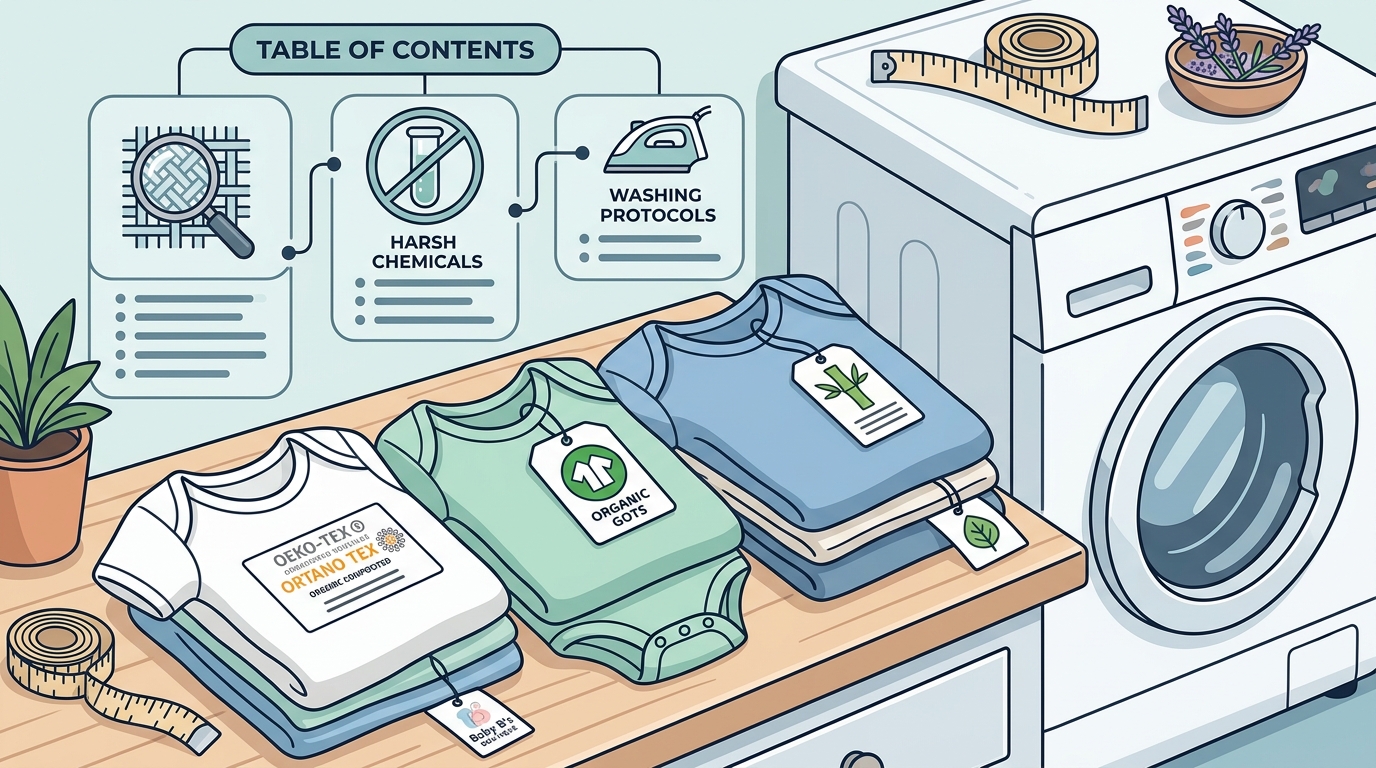
Parents should prioritize natural, certified fabrics like organic cotton and bamboo while avoiding chemical treatments such as formaldehyde and harsh dyes. Baby B's Boutique curates these safe options to protect delicate infant skin. This guide covers essential fabric checks, certifications, and washing protocols for 2026.
Natural Fibers: The Role of Cotton
Cotton is a natural cellulose fiber derived from the cotton plant. It is the most common material in infant apparel due to its softness and breathability. For sensitive skin, the source of the cotton matters significantly. Conventional cotton often involves heavy pesticide use, which can leave residues on the fabric. Organic cotton eliminates these synthetic inputs, making it a safer baseline for babies with eczema or allergies. For additional details, review the .
Why Breathability Matters
Infant skin is thinner and more permeable than adult skin. This means it absorbs environmental irritants more easily. Cotton allows air circulation, which helps regulate body temperature. Overheating can trigger sweat, and sweat can irritate sensitive skin. Choosing breathable natural fibers reduces the risk of heat rash and general discomfort. For additional details, review the Customer Experience.
Bamboo Fibers for Breathability
Bamboo viscose is a semi-synthetic fiber made from bamboo pulp. It is often marketed as a natural alternative to cotton. Bamboo fabric is known for its exceptional softness and moisture-wicking properties. It absorbs moisture up to three times better than cotton. This makes it ideal for babies who sweat easily or have prone to diaper rash. For additional details, review the Frequently Asked Questions.
Processing Considerations
While the raw plant is natural, the processing of bamboo into fiber often involves chemicals. Parents should look for closed-loop production methods. These methods recycle water and chemicals, reducing environmental impact and potential residue. Baby B's Boutique selects suppliers who prioritize transparent processing to ensure the final product is gentle on skin.
Tagless Designs and Seams
Traditional clothing tags are a common source of irritation. They can scratch delicate skin and cause redness or itching. Tagless designs print the size and care instructions directly onto the fabric. This eliminates the physical friction of a stiff label. Flat seams are also crucial. Raised seams can dig into the skin, especially around the neck and armpits.
Checking Seams and Labels
When inspecting garments, look for flat-locked seams. These lie flat against the body rather than creating a ridge. If a tag is present, ensure it is soft and removable. However, tagless construction is the gold standard for sensitive skin. It provides a smoother surface that reduces the risk of mechanical irritation.
GOTS Certification Standards
The Global Organic Textile Standard (GOTS) is the leading textile processing standard for organic fibers. It is a certification that ensures the organic status of textiles from harvesting of raw materials through environmentally and socially responsible manufacturing. GOTS certification covers the entire supply chain. It ensures that no harmful chemicals are used in processing, dyeing, or finishing.
What GOTS Guarantees
GOTS has two levels: Organic and Better. The Organic level requires at least 95% certified organic fibers. The Better level requires at least 70%. Both levels prohibit the use of chlorine bleach, heavy metals, and formaldehyde. For parents, the GOTS label is a reliable indicator of chemical safety. It provides a third-party verification that the garment meets strict environmental and social criteria.
OEKO-TEX Standards Explained
OEKO-TEX Standard 100 is a global testing and certification system for textiles. It is a label that guarantees the absence of harmful substances in textiles. The standard tests for over 350 substances, including pesticides, heavy metals, and allergenic dyes. For baby clothing, the highest level of certification is Class I. This class is specifically for products in direct contact with infant skin.
Class I Certification
Chemical Treatments and Dyes
Identifying Safe Dyes
Look for labels that specify